The Neuroscience of Memory and Meaning. How the Brain Gives Value to the World
Why do certain places, objects, and works of art come to matter so deeply to us? Neuroscience is revealing that memory is not simply stored in the brain. It is structured in relation to space, shaped by the environments we inhabit, and inseparable from the ways the brain assigns value to experience. Rather than passively recording the past, the brain actively reconstructs it, binding events to time and place and stabilizing some experiences over others. Remarkably, many of the same neural systems that support memory also enable us to imagine possible futures.
In this lecture, Daphna Shohamy will explore how the brain links memory, value, and space, and how recent discoveries in neuroscience shed light on enduring questions about identity, meaning, and conservation. By bringing neuroscience into dialogue with art and cultural heritage, we can better understand why preserving the material world is not only a cultural endeavor, but one deeply connected to the biological foundations of how we make sense of our lives.
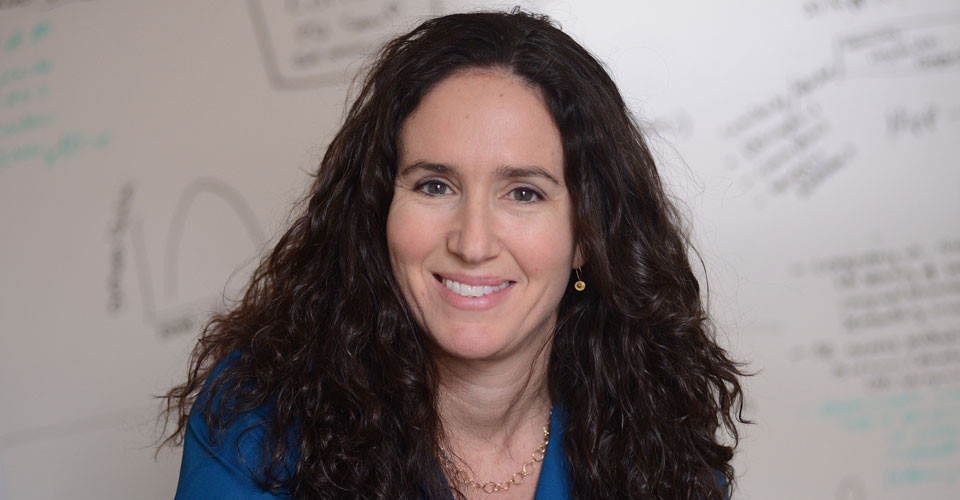
Daphna Shohamy is the Director and CEO of the Mortimer B. Zuckerman Mind Brain Behavior Institute, and the Kavli Professor of Brain Science at Columbia University, where she co-directs the Kavli Center for Neural Sciences. Shohamy's work focuses on the link between memory and decision-making. Combining brain imaging in healthy humans with studies of patients with neurological and psychiatric disorders, Shohamy seeks to understand how the brain transforms experiences into memories; how memories shape decisions and actions; and how motivation and exploration affect human behavior.
This lecture is part of "Galileo Week,” the Academy’s annual celebration of the collaboration between art, science, and the humanities. This year’s theme is "Conservation and the Brain: A collaboration on remembering through things", featuring two public lectures at the American Academy, on April 14th by Daphna Shohamy and on April 15th by Janani Balasubramaniam, and on April 16th at Parco della Musica, a performance by Bang on a Can of their oratorio "Lost Objects", music by Michael Gordon, David Lang, and Julia Wolfe.
I visitatori dell’American Academy in Rome sono pregati di mostrare un documento d’identità all’ingresso. Non è possibile accedere con bagagli o zaini di dimensioni superiori a cm 40 x 35 x 15. Non sono disponibili armadietti né guardaroba. Non è permesso portare animali (ad eccezione dei cani guida).
L’Accademia è accessibile agli utenti in sedia a rotelle e a coloro che devono evitare le scale. Si prega di inviare una email all’indirizzo tours@aarome.org se voi o qualcuno del vostro gruppo utilizza una sedia a rotelle o altri dispositivi di mobilità, così da poter garantire la migliore facilità di accesso ai visitatori. Se siete persone con disabilità o condizioni mediche che potrebbero richiedere particolari accorgimenti, vi preghiamo di inviarci un’email all’indirizzo tours@aarome.org.